
Executive Summary
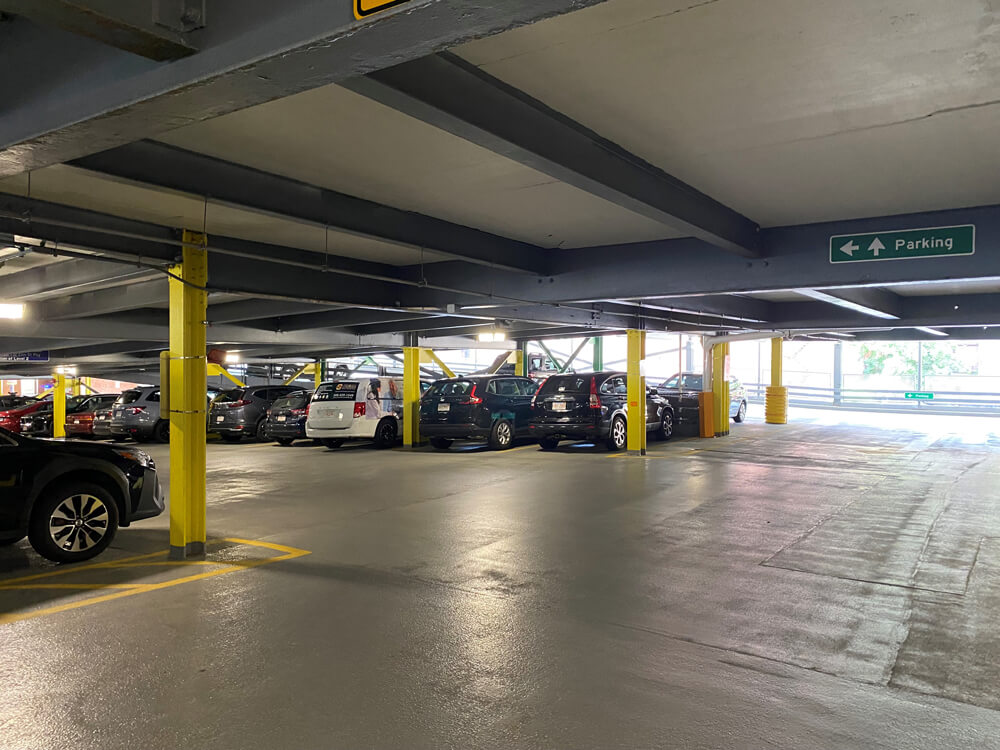
PARKING MINIMUMS in Worcester are the result of decades of parking development in the City, though they are by no means unique to it. This report, Part 2 of a two part Bureau series on parking, examines the historical development of parking in Worcester, analyzes parking minimums within zoning, and discusses the visible and invisible costs of parking. more parking has trade-offs. It uses space that could be used for other purposes and it has enormous monetary costs for developers, owners, renters, and residents. Many of these costs are often invisible to the drivers using that space. Parking can also perpetuate itself; more parking may increase car dependency which may lead to calls for more parking. Public Par(king): Worcester’s Past, Present, and Future of Parking finds that since the 1920s, Worcester’s planners and residents have clamored for parking, often in pursuit of economic development. However, building Public Par(king) should be read along with Feeding the Meter: Public Parking Usage in Worcester to get a full picture of the parking situation in Worcester and what could be done about it going forward.
PAGES 3-6 | PRESENT A HISTORY OF PARKING DEVELOPMENT IN WORCESTER
- Since before the 1924 City Plan, Worcester has grappled with the personal automobile and where to place them.
- Parking is a major issue in planning documents from the 1950s through the 2000s; and attitudes towards parking have often vacillated between “there is too much” to “there is too little.” This is especially true Downtown.
- At one point, Worcester had the largest parking garage in the world, but even that was not enough to save its mall, or reduce the clamor for more spaces.
PAGES 6-8 | DISCUSS ZONING FOR PARKING
- Zoning for parking is the idea that development should account for spaces for personal vehicles. This is known as “parking minimums.” Many municipalities in the United States have parking minimums. In recent years, many have been reforming or foregoing minimums as well.
- Parking minimums dictate, using a formula, how many spaces should be created. For example, according to Worcester’s zoning ordinance, a single family dwelling needs two spaces.
- Worcester does not have one standard set of parking minimums. Downtown (BG-6.0) has no parking minimum requirement. The Commercial Corridors Overlay District (mostly the Canal District and Shrewsbury St) have reduced minimums.
PAGES 9-14 | REVIEW THE COST OF PARKING MINIMUMS
- Parking minimums often have visible and invisible costs. Some of these include the use of space for parking that could be used for other productive purposes and the enormous monetary cost of building parking.
- Parking spaces in garages can cost tens of thousands of dollars per space to build.
- “Free” parking often hides its true costs for drivers; and in some ways subsidizes the costs of driving by doing so.
- Parking minimums can lead to unused spaces in residential developments; about 3.8% of owner occupied units and 24.7% of renter occupied units, according to the 2022 American Community Survey.
- Ending parking minimums may lower costs, and therefore allow more housing development to take place. This has been the case in Everett, which changed the way parking is approved.
PAGES 15-17 | POSE QUESTIONS TO CONSIDER AND CONCLUSIONS
- Eliminating parking minimums may increase new housing development and lower costs.
- Eliminating parking minimums should be done in the context of increasing and encouraging other mobility options.
- The City should better promote municipal garage usage, as it is a valuable public service.
- The City should encourage creative reuse of existing parking.
- Eliminating parking minimums can help the City reach its sustainability and Green Worcester Plan goals.

