The COVID-19 pandemic caused major changes in how businesses and schools operate. The Pew Research Center estimates that 71% of workers whose jobs could be done remotely are now working remotely. Only 20% of these workers were previously working remotely. This shift to remote work seems likely to persist into the future, with a majority of those now working from home hoping to remain remote. Worcester Public Schools (WPS) was one of the school districts that transitioned to online learning during the pandemic as did the higher education institutions in the city. Pandemic-induced changes to everyday life in Worcester highlighted the lack of broadband access and the weaknesses of existing infrastructure. A notable illustration of the city’s dependency came on Jan. 4, 2021, when Charter Spectrum experienced a significant outage on the first day of remote schooling after the holidays.
In July of 2020, the Worcester Regional Research Bureau released a report, Broadening Broadband, that documented access issues, examined municipal broadband as a potential remedy, and laid out the city’s challenging broadband market. Charter-Spectrum acts as a near total monopoly, which restricts consumer choice and bargaining power. Following a recommendation in that report, the City created a Municipal Broadband Taskforce (including the WRRB) to investigate improvements to broadband infrastructure.
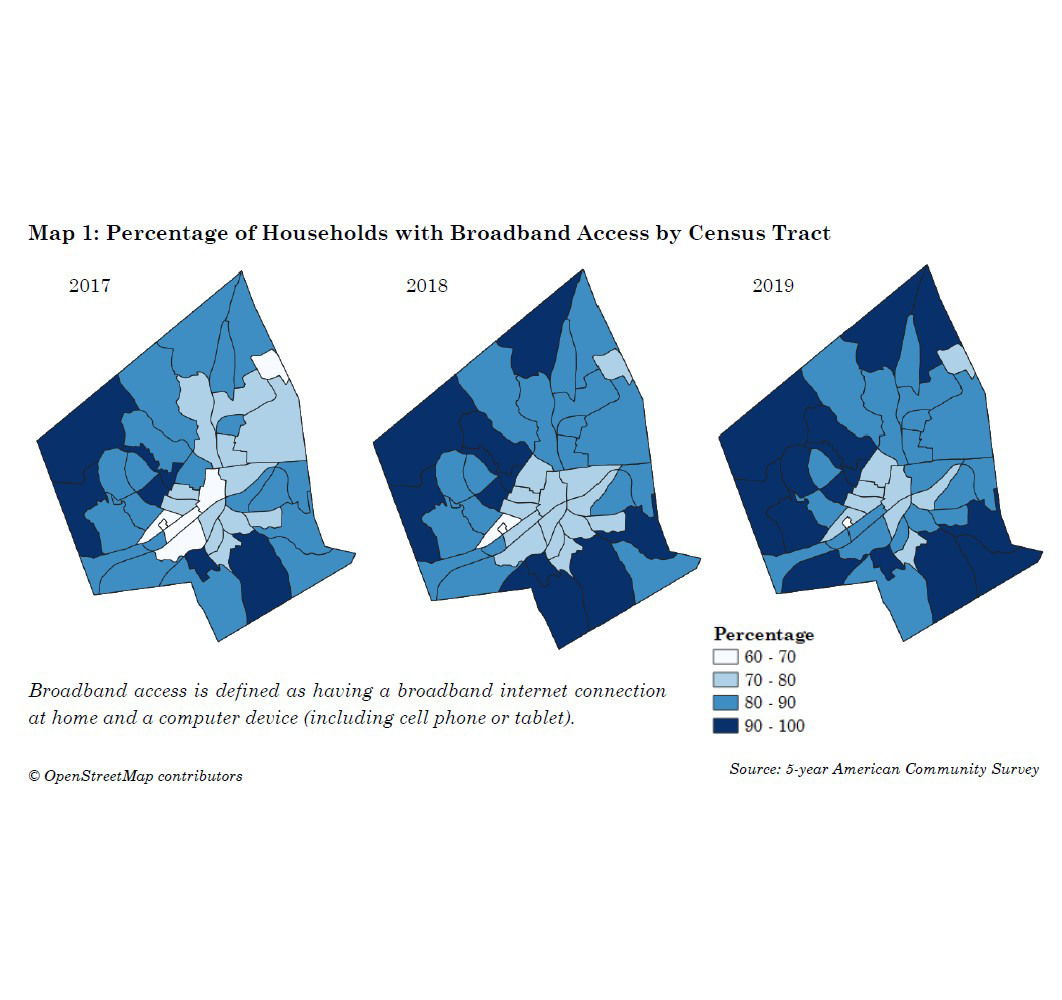
This document expands on that report, by looking at three years of data, examining internet connection speed, and WPS student access. This report is structured in four sections, each centered around a core question: How has broadband access in Worcester changed over the past three years? How is our current broadband infrastructure performing? What can be done to improve broadband in Worcester? How are the federal and state governments supporting broadband access initiatives?
Watch the webinar here.
DOWNLOAD REPORT